

G-Class – From Off-Road to Status Icon
The G-Wagen… or “Geländewagen”… whichever name you prefer. But the story of a vehicle that has left such a mark on world automotive history—an icon—is much more than just a status symbol and luxury today.
Off-road vehicles came into being with the war industry's transition from horses to internal combustion engines. Since the U.S. Army's Jeep-produced off-road vehicles first appeared on the bloody battlefields of World War II, the desire to conquer challenging terrain with these high-torque vehicles gained significant traction in civilian life. Following the war, as the industry evolved from military production to civilian automotive, these vehicles gained a significant market share. That was until the oil crisis… With the Arab states restricting global oil supply, the share of fuel-inefficient vehicles rapidly shrank.
Following this brief introduction to the history of off-road vehicles, let's get to our main topic: the G-Class. The G-Class emerged from a collaboration between Daimler-Benz and Steyr-Daimler-Puch in 1972. Like previous off-road vehicles, it was shaped by the growing military needs in Europe. However, there's a rather interesting rumor surrounding its origins: that the then-and-last Shah of Iran, Mohammad Reza Pahlavi, wanted a vehicle of this type produced for the Iranian Army. According to the rumor, the Shah's position as a Mercedes-Benz shareholder at the time played a significant role in the project's initiation.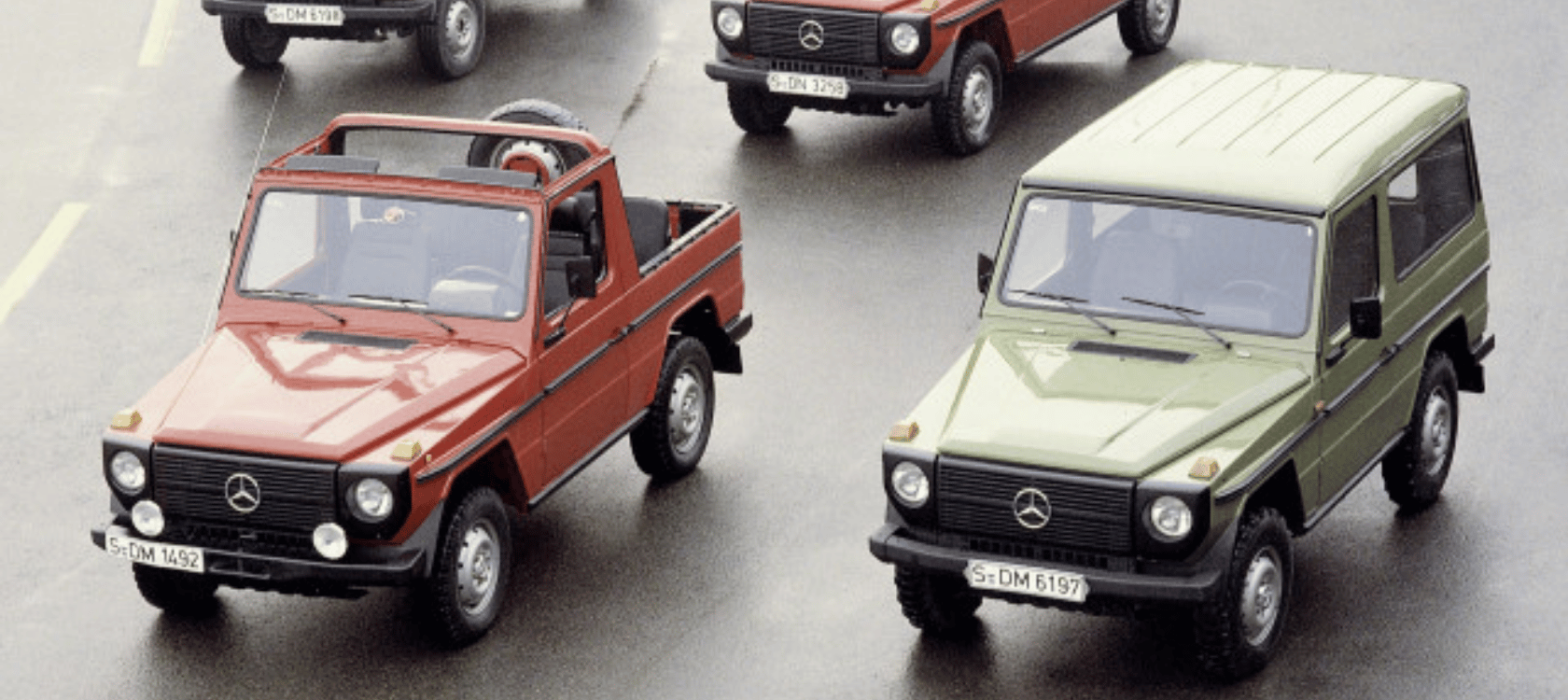
Following the initial conception, German engineers set to work with the goal of creating a vehicle capable of moving in any conditions. The first prototypes were tested in challenging terrains such as deserts, snow, and swamps. In 1975, a dedicated production line was established in Graz, Austria. And in 1979, the world met its first G-Class. Ironically, in the same year, Shah Reza Pahlavi lost his throne in the Iranian Islamic Revolution, and he never lived to see the G-Wagen, which he had helped to bring into existence, along with his vast car collection.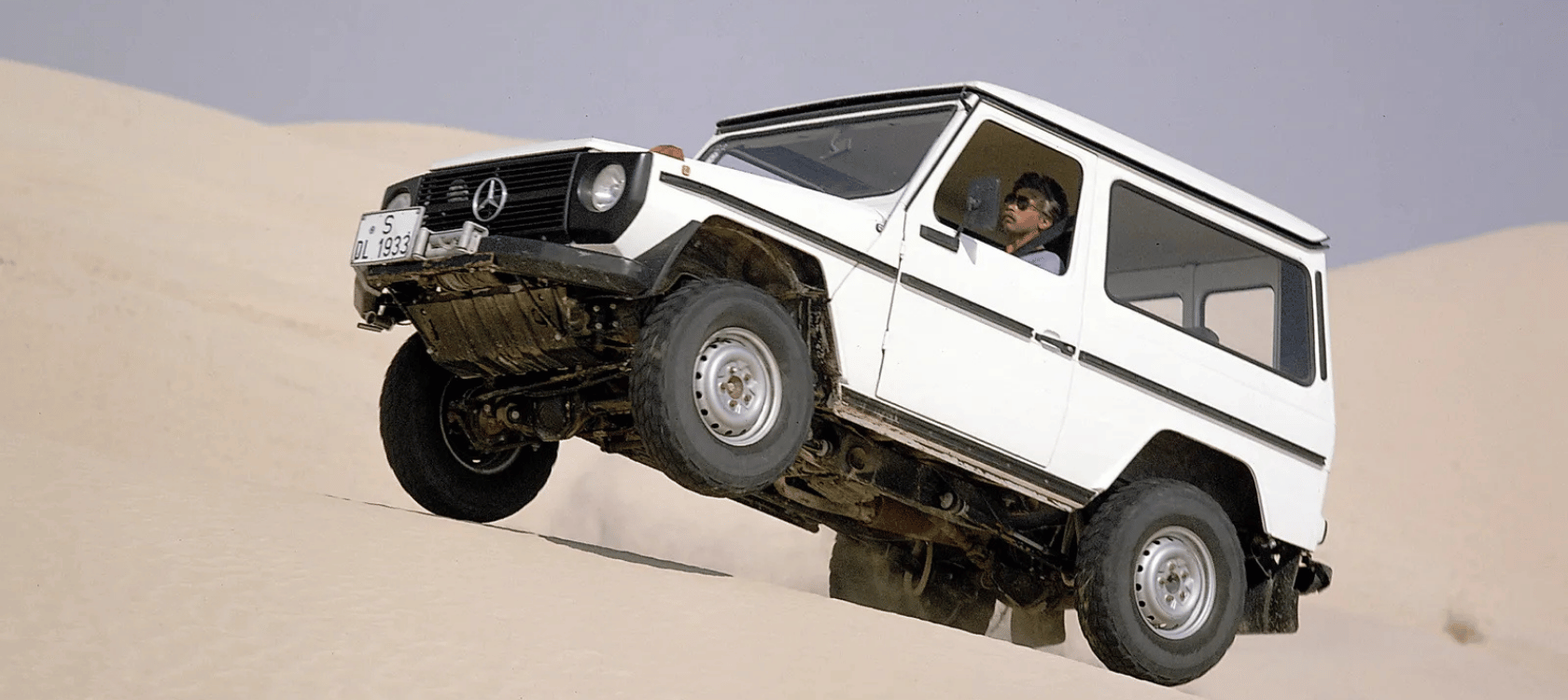
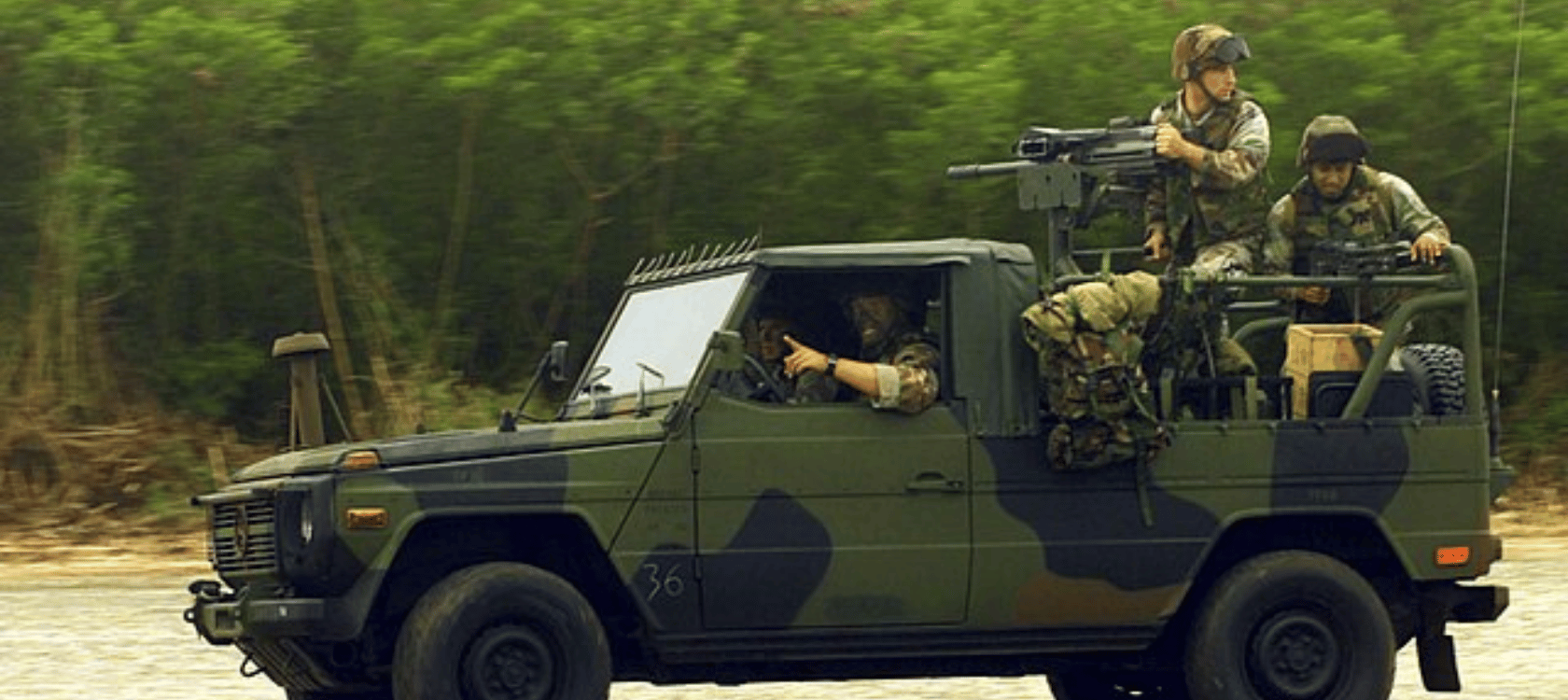
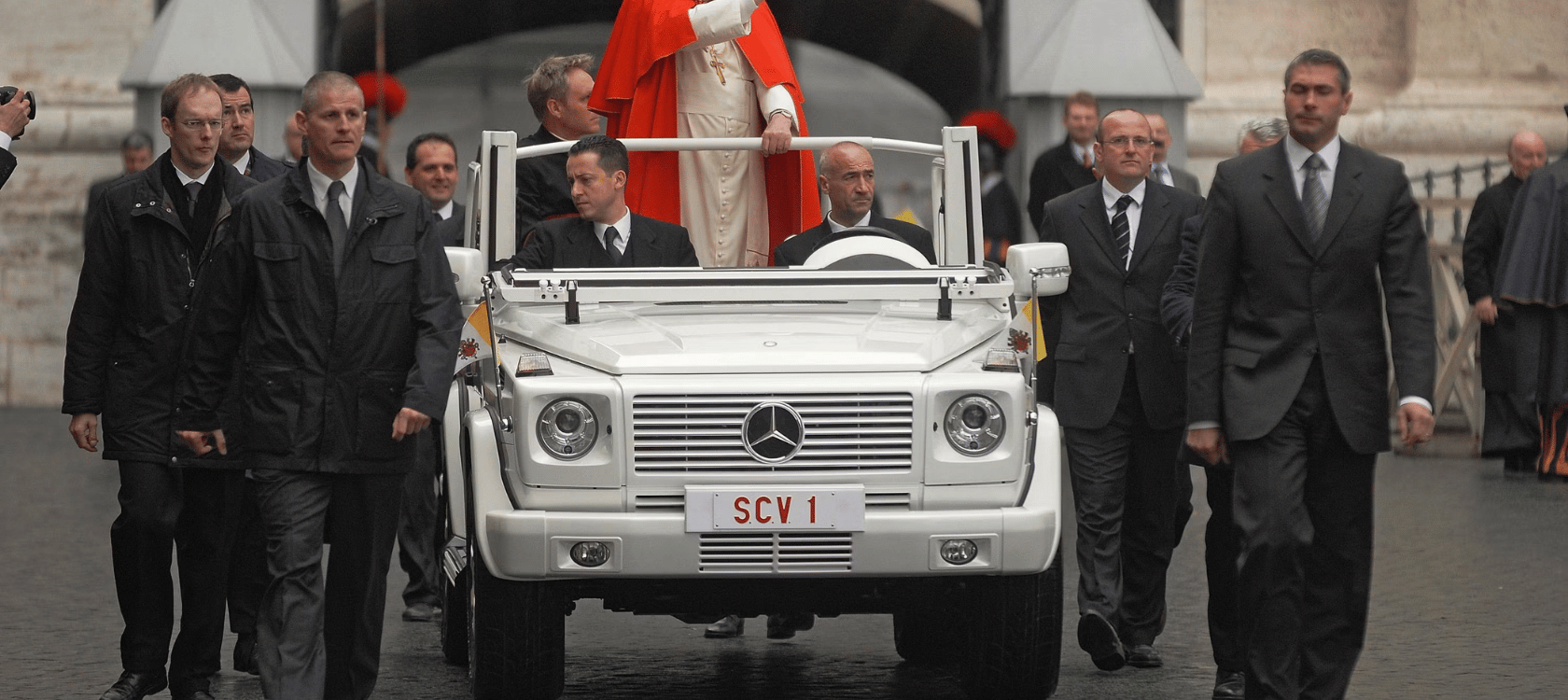
Developed after extensive testing, this vehicle quickly became hailed as the embodiment of German engineering and military discipline. Durable enough to rival German tanks, the G-Class served in numerous armies across various nations. Known as the "Wolf" in the German Bundeswehr, it also served in armies from Argentina to Norway. During the same period, a special "Popemobile" version, produced for Pope John Paul II, also made history. Participating in sacred ceremonies as well as on the battlefield, the G-Wagen exemplified its inherent versatility.
By the 1990s, the G-Class had become more than just a "duty vehicle," it was a status symbol. The new chassis code W463 emphasized comfort and luxury. Wood trim, leather upholstery, advanced safety systems... Introduced in 1993, the 500 GE, with its 5.0-liter V8 engine, transformed the SUV into a performance icon. Yet, Mercedes-Benz never changed one thing: the G-Class's angular, rigid, and characterful silhouette. This form has managed to remain "timeless," both in terms of engineering and aesthetics.
By the 2000s, the G-Class had gone far beyond the definition of a "luxury SUV." From Hollywood stars to collectors, everyone had a G-Wagen in their garage. The AMG G 55 and its successor, the G 63 AMG, became icons for performance enthusiasts. The roar of its V8 engine made you smell the mud even on city streets. When rumors spread in 2013 that production would end, the global reaction forced Mercedes-Benz to back down: "The G-Class will never die."
Today, when you think of the G-Class, the first name that comes to mind is undoubtedly the G 63 AMG. Its handcrafted 4.0-liter V8 Biturbo engine, delivering 585 PS and 850 Nm of torque, brings this legend into our time. But these figures aren't just technical data; they're modern interpretations of the G-Wagen's genetic code. AMG engineers preserved the G-Class's angular silhouette while giving it a completely different spirit. Combined with the intelligent AMG Performance 4MATIC system, the 9-speed AMG SPEEDSHIFT TCT transmission, and the AMG RIDE CONTROL+ suspension, the result is a performance beast that maintains the same character on any surface.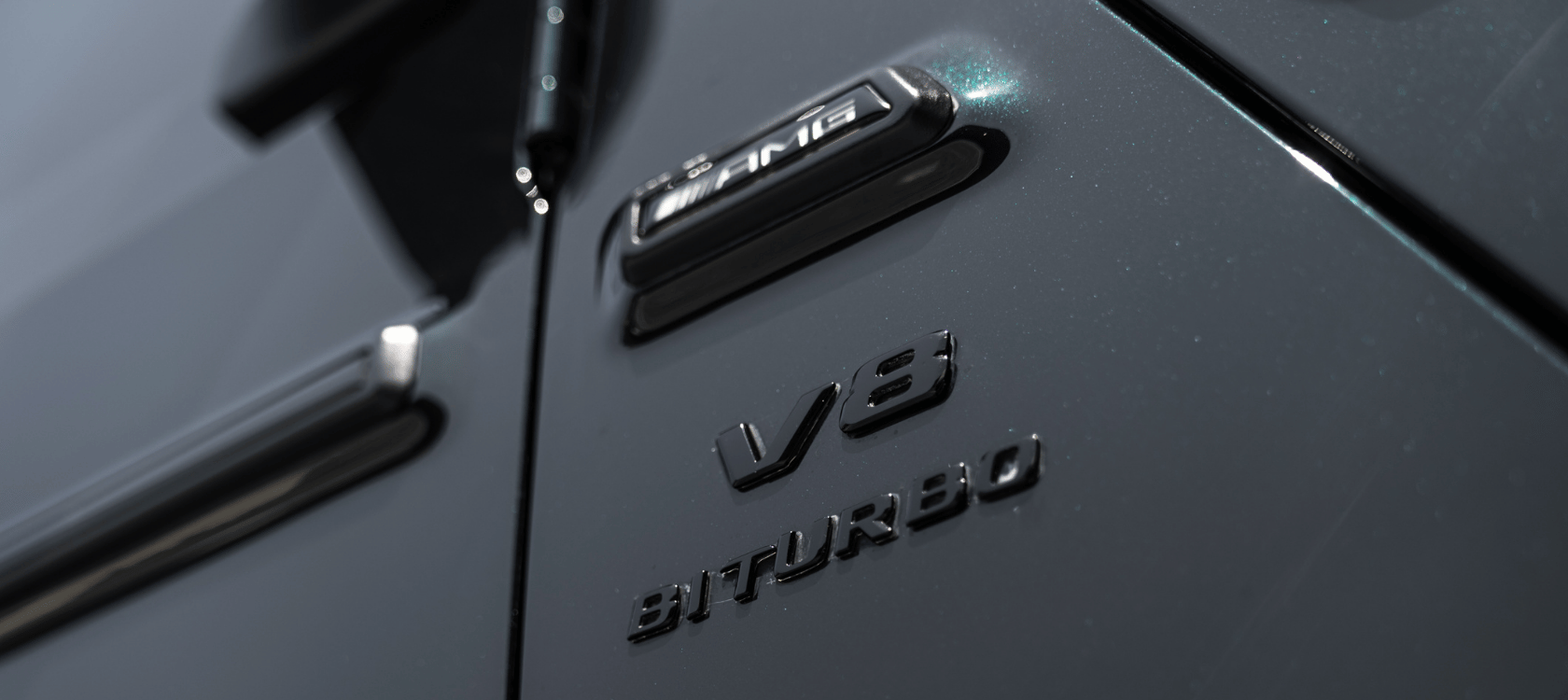
Just like in 1979, every G-Class today is delivered without passing through the Schöckl Mountain test track. So whether you're in the narrow streets of Vienna or on the dirt roads of Cappadocia — behind the wheel of a G 63 AMG you're touching an invisible bridge between the past and the present.
The G 63 AMG is more than just an SUV; it's the perfect balance of mechanical fidelity and modern power. It embodies military discipline at its roots, handcrafted details, and pure engineering within. And each new generation G 63 AMG reaffirms Mercedes-Benz's motto:
"When the road ends, the real journey begins."