



F1 Legacy Lands on the Road - McLaren MP4-12C
When you think of McLaren, Formula 1 naturally comes to mind. However, the brand's claim to "translate track technology to the road" truly materialized with the MP4-12C, which went into mass production in 2011. In 2012, the model, simplified to the 12C name, ushered in a new era by bringing solutions like a carbon monocoque chassis, active chassis management, and an ultra-fast dual-clutch transmission to everyday life.
Following the end of production on the iconic F1 in 1998, McLaren returned to regular road car sales with the MP4-12C/12C between 2011 and 2014. Development began in 2005; the car was unveiled online in September 2009 and began rolling off the assembly line in Woking/Surrey in February 2011. The 12C Spider with a folding hardtop joined the family in July 2012. Production concluded in April 2014 with over 3,400 units; the 650S, with which it shares many components, took over. This story clearly demonstrates McLaren Automotive's comeback strategy: to translate everything learned from racing into a lean and functional product philosophy.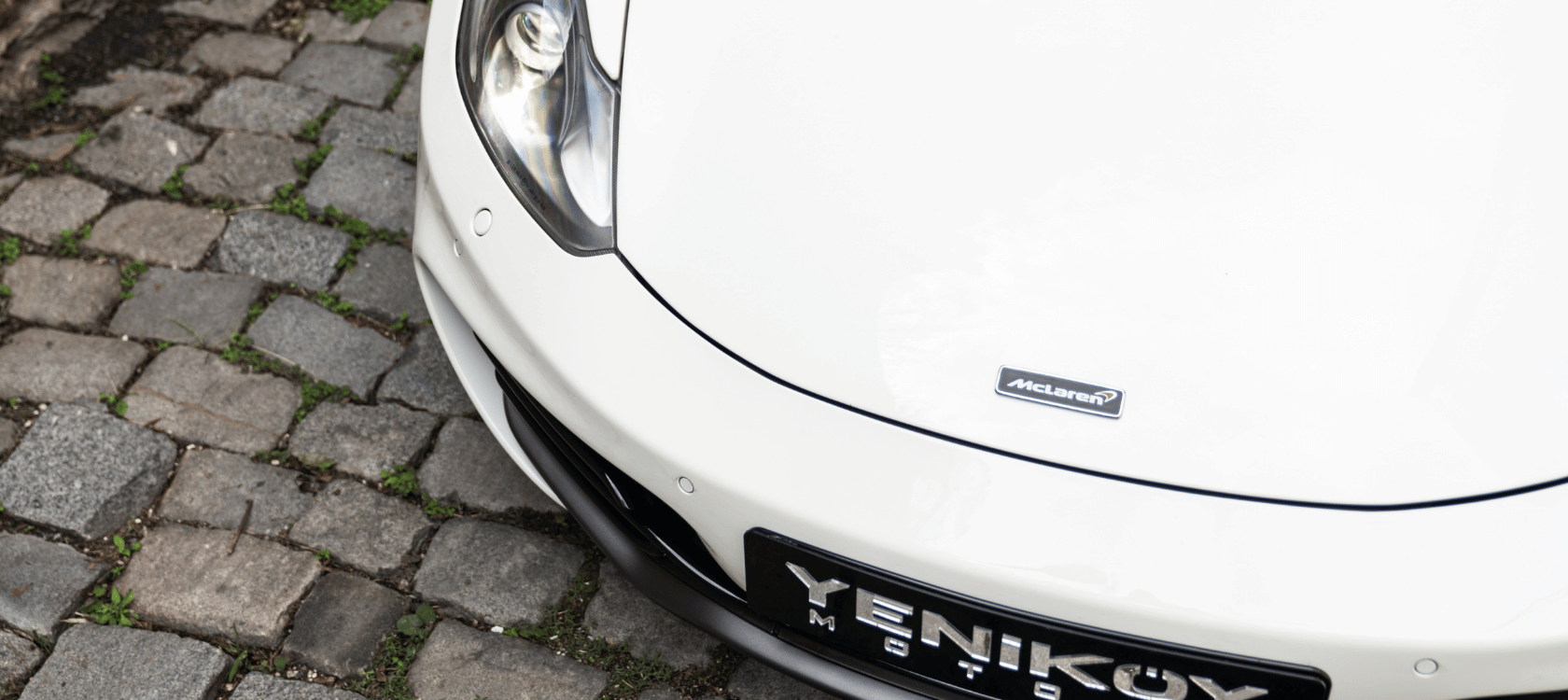
“MP4” referenced the McLaren Project 4 legacy, while “12” represented the brand’s internal performance index, and “C” symbolized the carbon body structure. In 2012, the name was simplified to 12C. At the heart of the model was the MonoCell, a single-piece carbon fiber structure. Compared to classic riveted alloy structures, it was much lighter, more rigid, and faster to produce. McLaren extended this architecture to all subsequent models, moving the carbon chassis from the “niche hypercar” category to a mass-produced part. On the suspension side, the ProActive Chassis Control (PCC) system, which hydraulically connects the double wishbone arrangement, stood out. PCC controlled body roll without the need for traditional anti-roll bars, visibly changing the car's character with Normal, Sport, and Track modes.
Just behind the hood was the M838T, a 3,799 cc, 90° V8 twin-turbo engine. This dry-sump oil-lubricated unit produced 625 PS of power and 600 Nm of torque, enabling 0–100 km/h acceleration in 3.1 seconds and a top speed of 333 km/h. Power was transmitted to the rear wheels via a Graziano-manufactured 7-speed SSG (Seamless Shift Gearbox). The hallmark of the SSG was its "pre-cog" logic: when the driver slightly pulled the paddle shifter, the system would pre-prepare the next gear, resulting in gear changes occurring at lightning speed.
The 12C was one of the first models to bring the active aerodynamics approach we're used to seeing on the track to the road. The rear wing's Airbrake function provided extra downforce to the rear axle by raising to a vertical position during hard braking, and optimized load distribution on the body at high speeds. Together with the PCC's hydraulic linkages, the chassis electronically and hydraulically balanced body movements during braking, cornering, and acceleration.
Despite its strong performance in terms of data, what truly made the 12C special was its clean ride. The lightweight yet rigid monocoque, precise steering responses, the comfortable PCC system that operates "as if there were no stabilizer bar," and the lag-free SSG transmission combined to keep the car calm even at high speeds. Compared to its contemporary "emotional" rivals, it leaves a more technical, more neutral impression; the steering and chassis communicate transparently with the driver.
The 12C struck a true balance between performance and everyday rhythm. Driving modes changed not only the engine but also the chassis and drivetrain. With its minimalist cockpit layout, Meridian sound system, connectivity solutions, and practical driving aids, it felt designed not just for the track, but for everyday use.
The McLaren 12C represented two major revolutions in the modern supercar concept. First, it brought the carbon monocoque structure, previously exclusive to hypercars, to the forefront of mass production. This structure, called “MonoCell,” made McLaren’s engineering vision accessible; combining lightness, durability, and safety, it formed the foundation for all future models. Second, the ProActive Chassis Control (PCC) system, introduced with the 12C, proved that comfort and handling could be achieved simultaneously. Actively managing body movements without the need for traditional anti-roll bars, this system redefined the concept of “everyday livability” in supercars.
Today, the 12C is remembered not just as a model, but as a philosophy. Laying the foundation for the 650S and all subsequent McLaren models, the 12C is considered an engineering manifesto that brought track-proven principles to the road in an unpretentious, simple, and rational way.
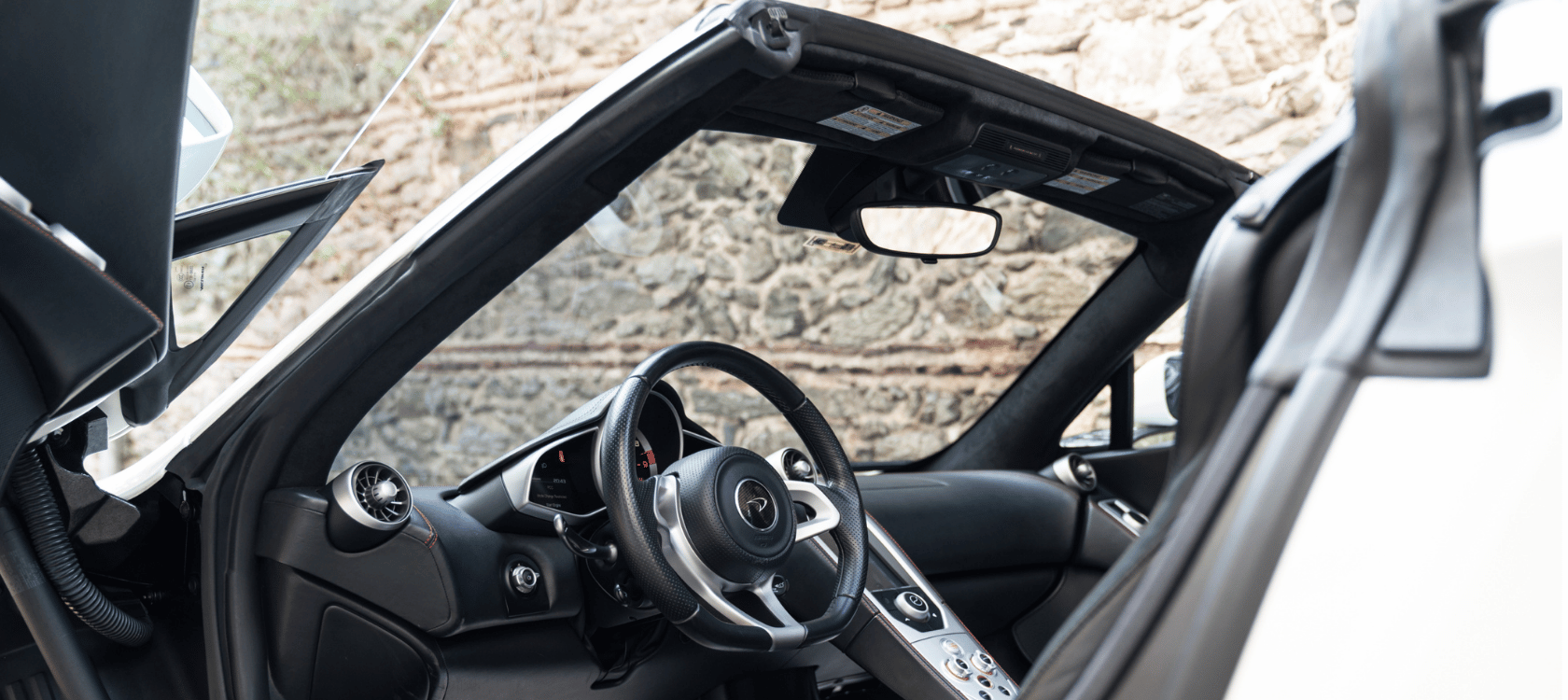
The McLaren 12C is a car that brings track technology to everyday driving with its carbon monocoque structure, PCC active chassis management, the instantly responsive power of the M838T/SSG combination, and aerodynamic intelligence. While the numbers on paper are impressive, the real difference lies in the 12C's ability to remain calm even at high speeds. Racing-derived technologies are not just for show here; they are invisible aids that refine the driving experience. In well-preserved examples in Turkey, the combination of 625 hp, 600 Nm, SSG, PCC, Airbrake, Launch Control, and Meridian components demonstrates how this engineering becomes "readable" every day. In short, the 12C is special not just because it's fast, but because it remains rational and calm even at high speed.
Brief technical specifications: 625 PS power, 600 Nm torque, 0–100 km/h in 3.1 seconds, 0–200 km/h in 8.8 seconds, top speed of 333 km/h, dry weight of 1,341 kg, and CO₂ emissions of 279 g/km.
Don't just read about this unique engineering that brings the spirit of F1 to the road — get behind the wheel.